DescriptionPT-141 (Bremelanotide) Product Overview
PT-141, also known as bremelanotide, is a synthetic cyclic peptide analogue developed from melanocortin peptide research. It is studied primarily for its interactions with melanocortin receptors and the intracellular signalling pathways activated by this receptor family.
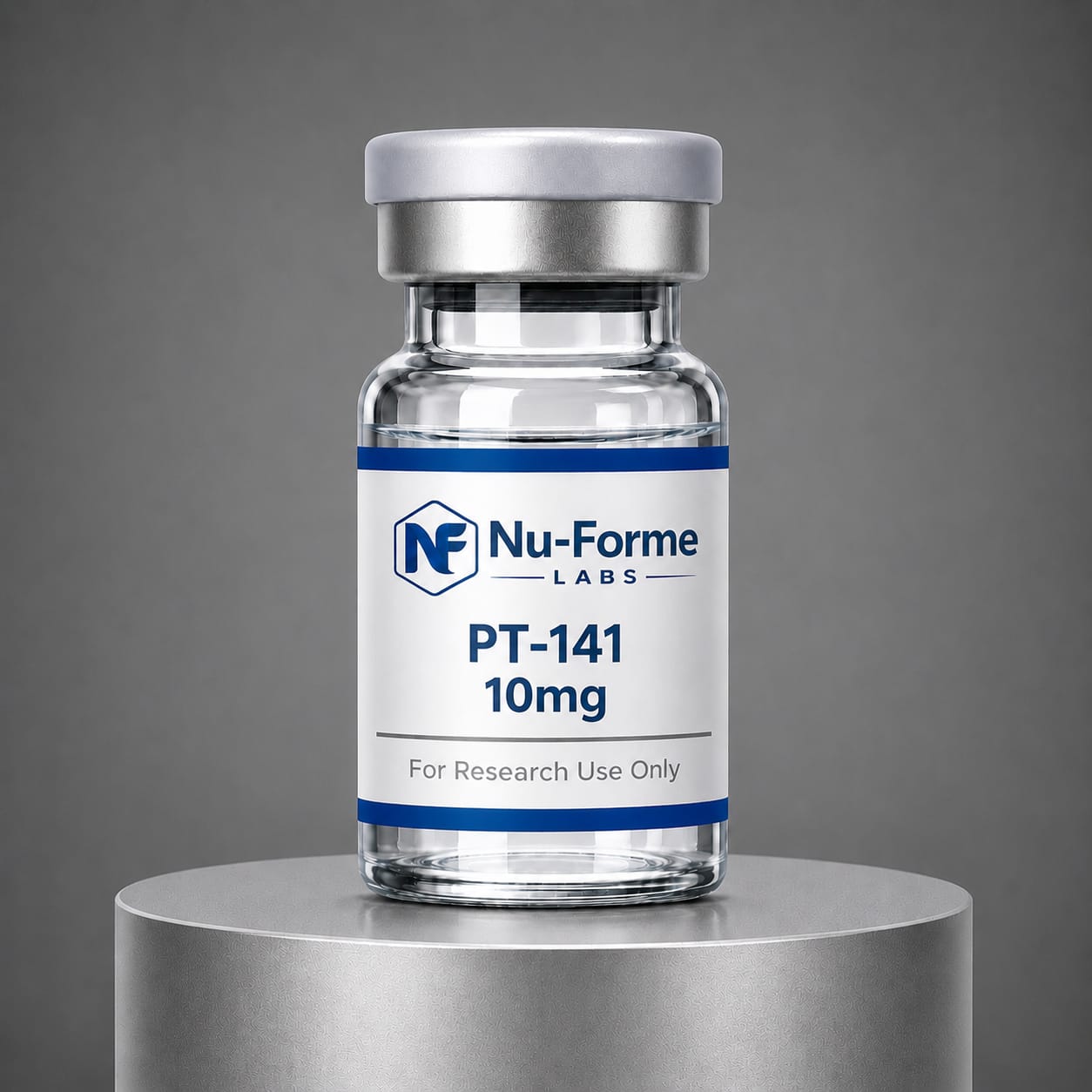
Nuforme supplies PT-141 as 10mg of lyophilized research material in a single vial. The product is intended for controlled laboratory investigation involving receptor activity, neuroendocrine signalling and comparative melanocortin research.
Product Specifications
Product name: PT-141
Alternative name: Bremelanotide
Peptide class: Synthetic cyclic heptapeptide
Reference sequence: Ac-Nle-cyclo[Asp-His-D-Phe-Arg-Trp-Lys]-OH
Parent-peptide formula: C50H68N14O10
Approximate parent-peptide molecular weight: 1,025.2 g/mol
Primary research targets: Melanocortin receptors
Quantity: 10mg
Format: Lyophilized material
Container: Single vial
Structural Background
PT-141 is a cyclic derivative of the alpha-melanocyte-stimulating hormone research scaffold. Cyclization constrains the peptide structure and distinguishes it from the naturally occurring linear hormone.
The sequence incorporates norleucine and D-phenylalanine substitutions. These structural features are frequently examined in peptide research involving receptor affinity, conformational stability and resistance to enzymatic degradation.
Published chemical values commonly refer to the parent peptide. Research material may be supplied in an acetate, trifluoroacetate or another salt form, which can affect the reported formula, molecular weight and analytical results. The exact form should therefore be verified using the documentation for the individual batch.
Melanocortin Receptor Research
The melanocortin receptor family contains five G-protein-coupled receptor subtypes designated MC1R through MC5R. These receptors have different tissue distributions and biological roles.
PT-141 is described in scientific literature as a melanocortin receptor agonist, with research frequently focusing on MC3R and MC4R signalling. Activity at other melanocortin receptor subtypes may depend on the experimental system, receptor-expression level and assay conditions.
Melanocortin receptors typically couple to Gs proteins and can stimulate cyclic AMP production. Receptor activation may also be examined through downstream phosphorylation, beta-arrestin recruitment, receptor internalization and desensitization assays.
Published receptor-affinity or potency values should not be treated as universal specifications for this product. Experimental results can vary according to cell line, receptor density, assay design, incubation time and the analytical characteristics of the tested batch.
Potential Research Areas
MC3R and MC4R receptor-activation studies
Melanocortin receptor binding and selectivity assays
Cyclic AMP and downstream signalling analysis
Concentration-response experiments
Receptor internalization and desensitization studies
Beta-arrestin recruitment assays
Neuroendocrine and hypothalamic signalling models
Comparative studies with alpha-MSH, Melanotan II and selective melanocortin agonists
Peptide stability and degradation analysis
Analytical identity, purity and peptide-content testing
Research Material and Pharmaceutical Product Distinction
A finished bremelanotide prescription product is marketed in the United States under the brand name Vyleesi. That product is a regulated pharmaceutical formulation with its own manufacturing controls, concentration, delivery system and approved labelling.
Nuforme PT-141 is a separate laboratory research material. It should not be described as Vyleesi, generic Vyleesi, a prescription medication or a pharmaceutical equivalent. Clinical findings obtained with an approved or investigational pharmaceutical formulation do not establish the identity, purity, safety or performance of this research vial.
Analytical Considerations
Researchers should review the batch-specific documentation before beginning an experiment. Peptide identity, chromatographic purity and total peptide content are separate analytical characteristics and should not be treated as interchangeable.
Mass spectrometry may be used to evaluate molecular identity, while HPLC or UPLC can assess chromatographic purity. Quantitative testing is required to confirm the actual amount of peptide present. Counterions, residual solvents and water content should also be considered when interpreting analytical results.
Storage and Handling
Store the unopened vial according to the product label and applicable batch documentation. Keep the material sealed and protected from inappropriate heat, light and moisture. Preparation, solution stability and experimental storage conditions should be established through validated laboratory procedures.
For laboratory research only. Not for human consumption, administration or veterinary use. This product is not a drug, medication, supplement or cosmetic and is not intended to diagnose, treat, cure or prevent any disease.