DescriptionRetatrutide (LY3437943) Product Overview
Retatrutide, also known by the development code LY3437943, is a synthetic, lipidated peptide engineered as a single-molecule agonist of three receptor systems: the glucose-dependent insulinotropic polypeptide receptor (GIPR), glucagon-like peptide-1 receptor (GLP-1R) and glucagon receptor (GCGR).
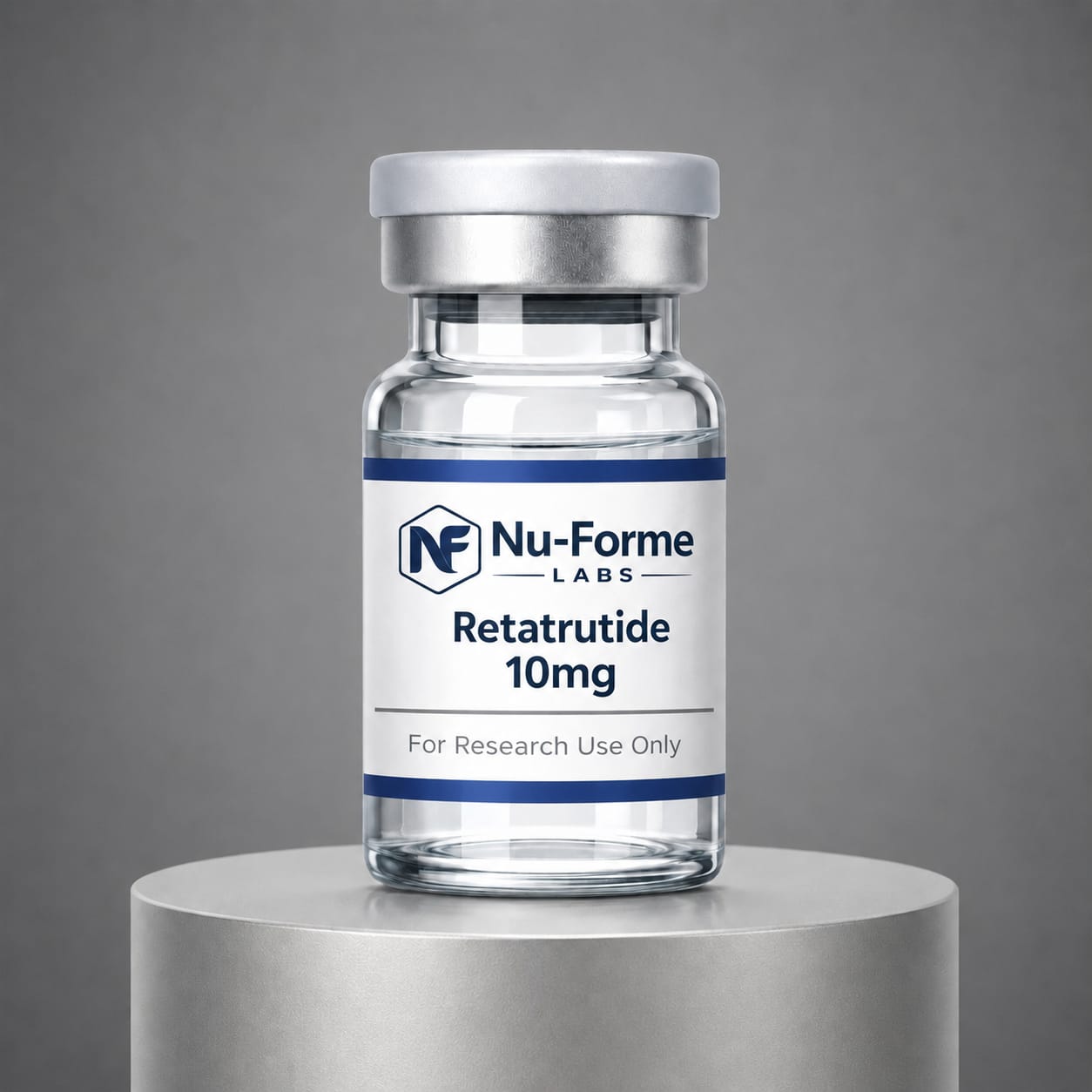
Nuforme supplies Retatrutide as lyophilized research material in 10mg and 20mg vial formats for controlled laboratory investigation. It is a single modified peptide molecule—not a physical blend of three separate peptides.
Product Specifications
Product name: Retatrutide
Development code: LY3437943
CAS number: 2381089-83-2
Peptide length: 39 residues
Published molecular formula: C221H342N46O68
Approximate molecular weight: 4,731 g/mol
Receptor profile: GIPR, GLP-1R and GCGR agonist
Available quantities: 10mg or 20mg per vial
Format: Lyophilized material
Container: Single vial
Structural Background
Retatrutide incorporates non-standard amino-acid substitutions and a lipid side chain as part of its engineered structure. These modifications distinguish it from naturally occurring GIP, GLP-1 and glucagon peptides.
The three target receptors are class B G-protein-coupled receptors that can activate intracellular signalling pathways, including cyclic AMP production. Published in-vitro research reported activity at all three receptors, with greater activity at GIPR and more balanced activity between GLP-1R and GCGR in the evaluated assay systems.
Receptor activity can vary with cell line, receptor expression, assay design and experimental conditions. Published potency values should therefore not be treated as universal specifications for an individual research vial.
Triple-Receptor Research Context
Retatrutide is described as a triple agonist because one molecule can interact with GIPR, GLP-1R and GCGR. This classification does not mean that the three receptors are activated with identical potency, duration or downstream signalling behaviour.
The combined receptor profile makes the peptide relevant to comparative experiments examining how single-, dual- and triple-receptor agonists differ within controlled cellular or preclinical models. Appropriate receptor-specific controls are required to determine the contribution of each pathway.
“GLP-3” is an informal and scientifically inaccurate nickname sometimes used for Retatrutide. Retatrutide does not interact with a receptor called GLP-3; the relevant targets are GIPR, GLP-1R and GCGR.
Potential Research Areas
GIPR, GLP-1R and GCGR receptor-activation assays
Comparative single-, dual- and triple-agonist studies
Cyclic AMP and downstream signalling analysis
Receptor potency and concentration-response experiments
Receptor internalization and desensitization research
Metabolic-signalling studies in cellular and preclinical models
Peptide stability and degradation analysis
Analytical identity, purity and peptide-content testing
Analytical Considerations
Researchers should review the documentation associated with the individual batch before use. Peptide identity, chromatographic purity and total peptide content are separate analytical characteristics and should not be treated as interchangeable.
Identity may be evaluated using mass spectrometry, while chromatographic methods such as HPLC or UPLC can be used to assess purity. Quantitative peptide-content testing is required to confirm the amount of material present in a vial. The salt form, counterions, residual water and other batch-specific characteristics may affect analytical results and should be documented where relevant.
Investigational Status
Retatrutide remains an investigational compound. Published clinical findings concern Lilly-manufactured investigational material evaluated in controlled clinical trials. Those findings do not independently establish the identity, purity, safety, dosage or clinical performance of material supplied by another vendor.
This Nuforme product should not be represented as Lilly clinical-trial material, an approved pharmaceutical product or a substitute for any regulated medication.
Storage and Handling
Store the unopened vial according to the conditions stated on the product label and applicable batch documentation. Keep the material sealed and protected from inappropriate heat, light and moisture. Laboratories should establish preparation, solution-storage and stability conditions through validated internal procedures.
For laboratory research only. Not for human consumption, administration or veterinary use. This product is not a drug, medication, supplement, food or cosmetic and is not intended to diagnose, treat, cure or prevent any disease.